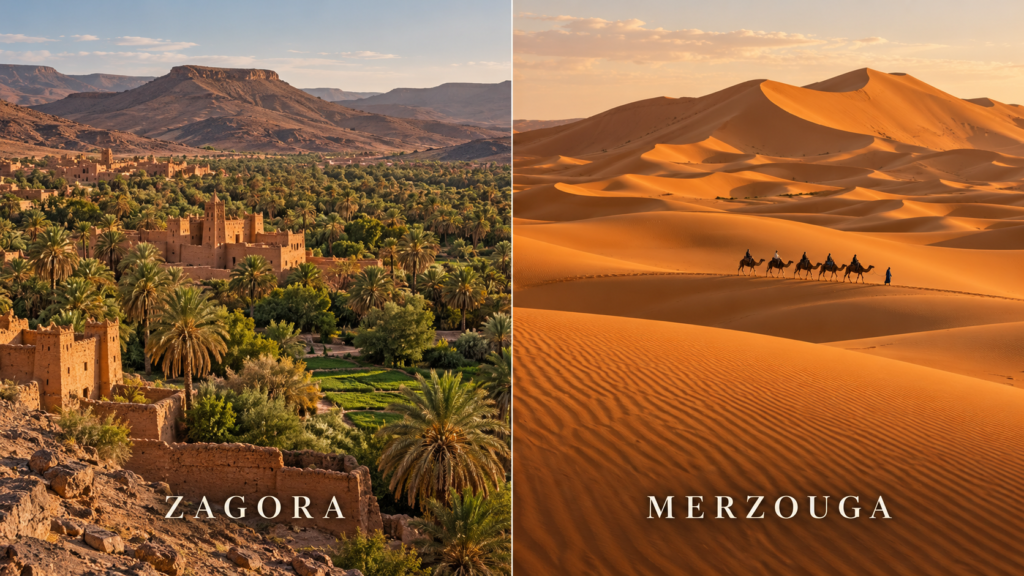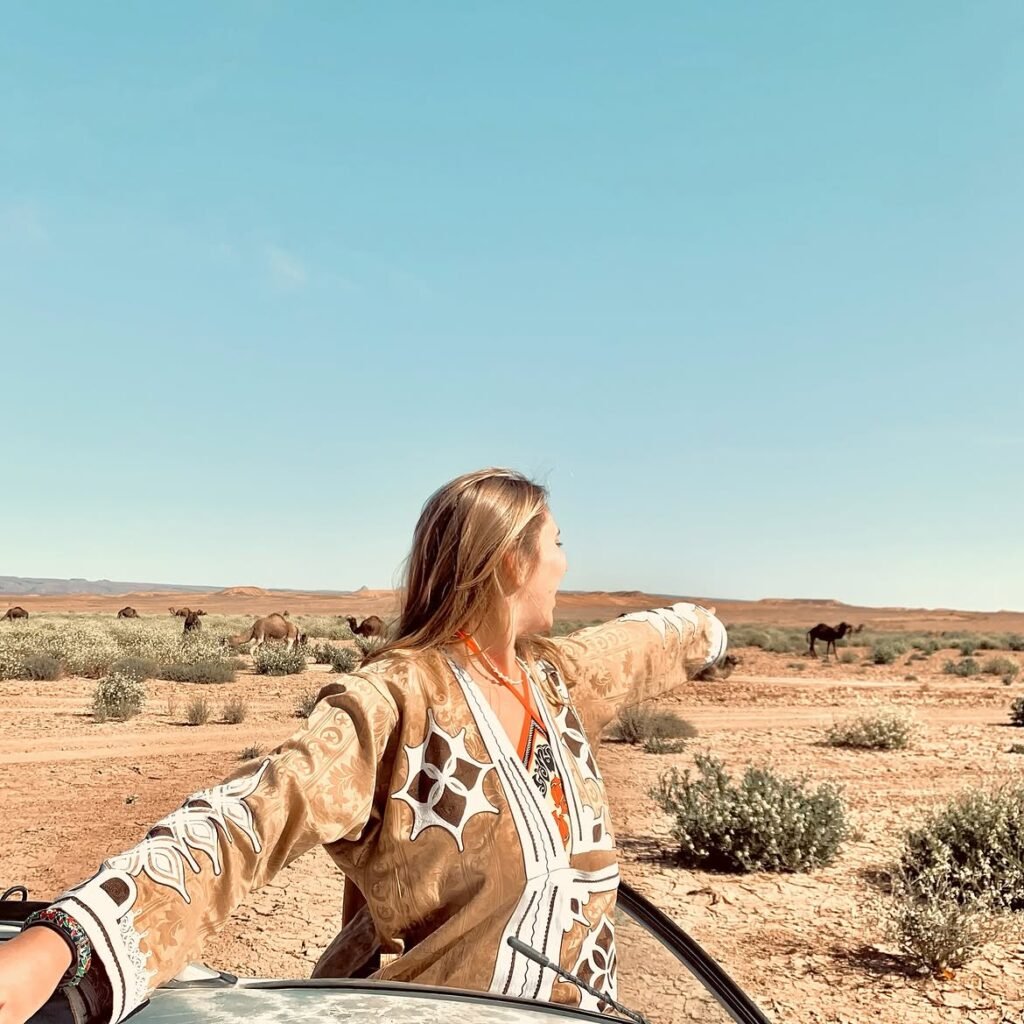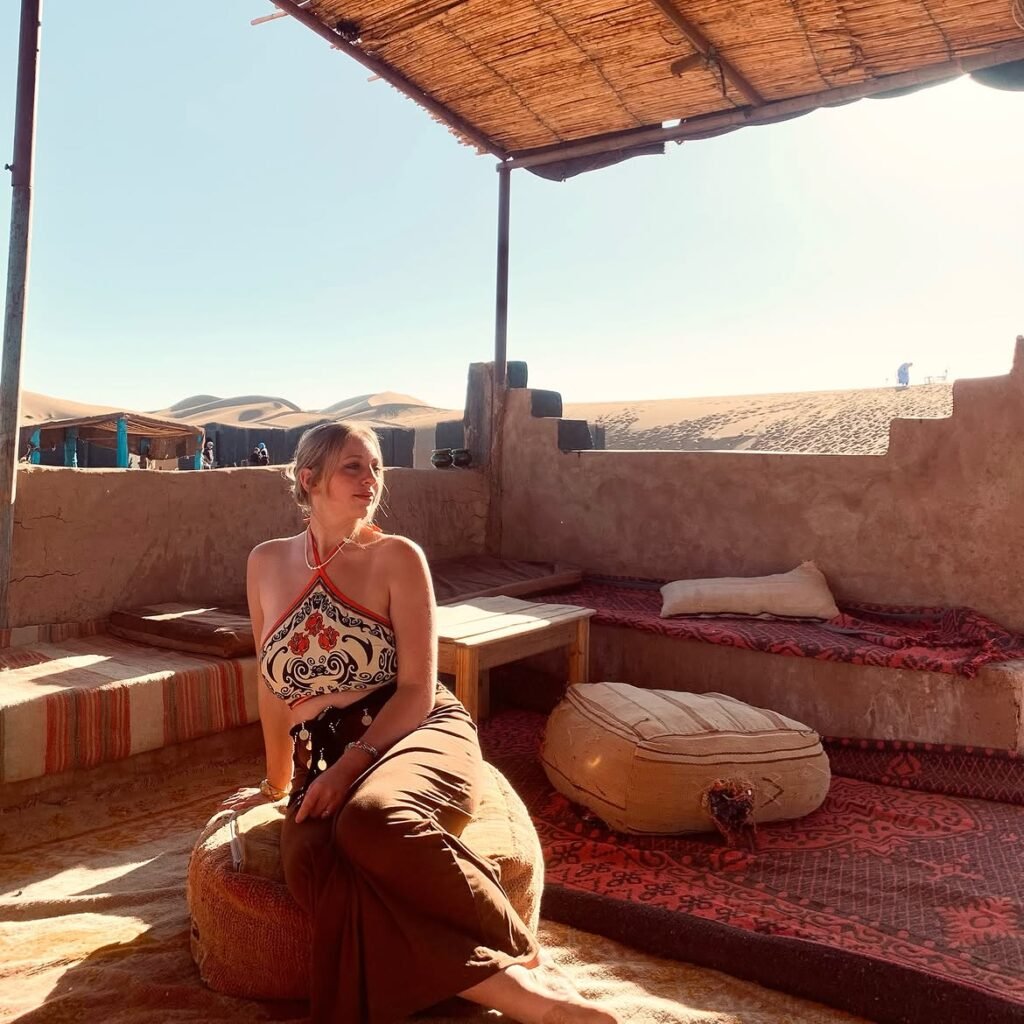
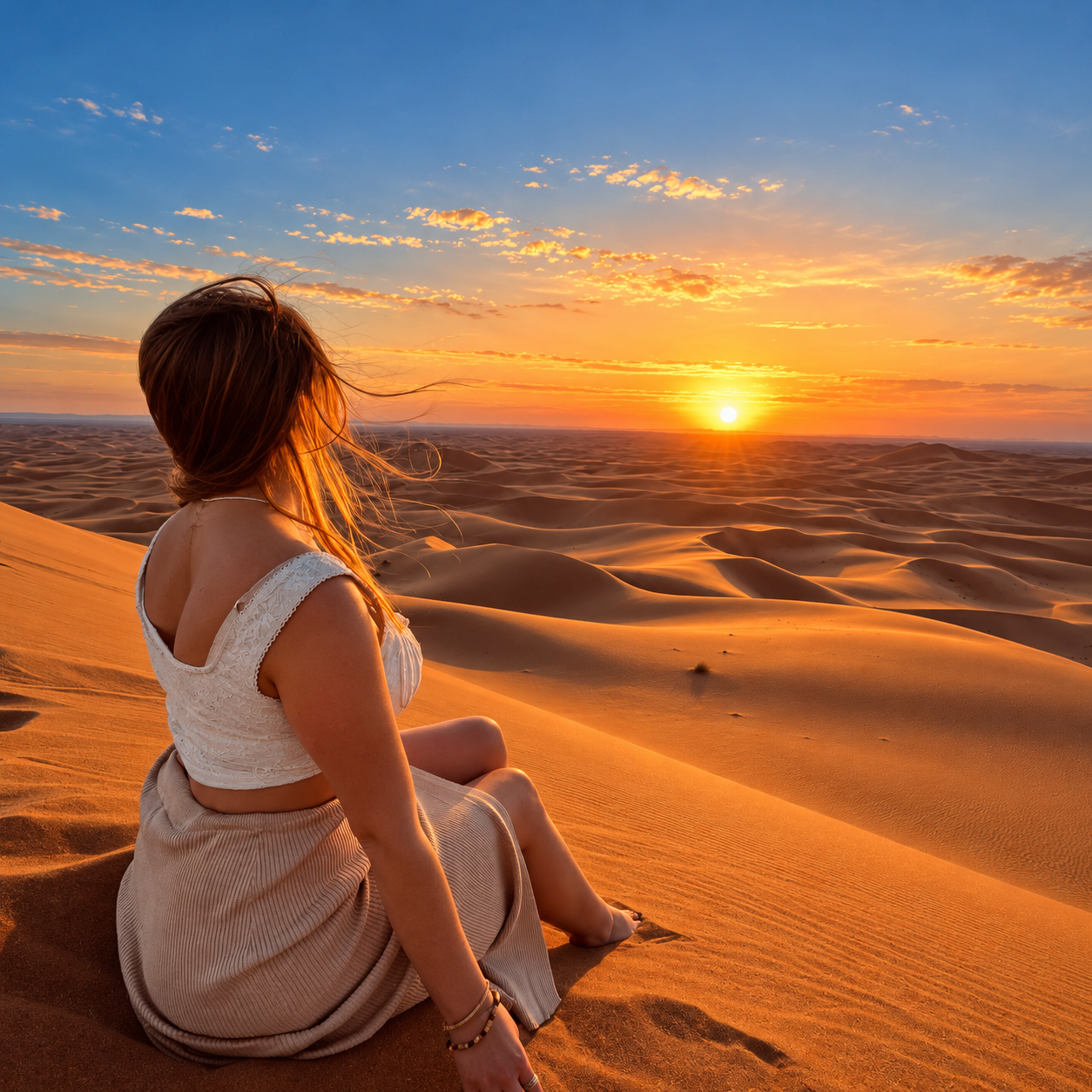
The best time to visit the Sahara in Morocco is from October to April, with the sweet spots in October–November and March–April. Days are warm and bright, nights are cool enough for a blanket by the fire, and the light on the dunes is at its most beautiful. December and January are lovely too, if you are ready for nights close to freezing. June to August is simply too hot for a comfortable night in the dunes.
The figures below are for the Merzouga area and Erg Chebbi, the dunes most travellers visit. They are typical averages, so expect variation from year to year.
Sahara temperatures month by month
| Month | Day (approx.) | Night (approx.) | Our verdict |
|---|---|---|---|
| January | 18°C | 3°C | Clear and beautiful, cold nights |
| February | 21°C | 5°C | Very good |
| March | 25°C | 9°C | Excellent, some windy days |
| April | 29°C | 13°C | Excellent |
| May | 34°C | 18°C | Good early in the month, hot later |
| June | 39°C | 22°C | Too hot for most travellers |
| July | 43°C | 26°C | Not recommended |
| August | 41°C | 25°C | Not recommended |
| September | 36°C | 20°C | Hot early, pleasant late |
| October | 29°C | 14°C | Excellent, our favourite |
| November | 23°C | 8°C | Excellent |
| December | 18°C | 4°C | Clear skies, cold nights |
Autumn: October and November
For many of our travellers, October is the single best month in the desert. The summer heat has gone, the sand is warm underfoot at sunset, and you can sit outside after dinner without a heavy coat. November is a little cooler and quieter, with excellent clear skies.
Winter: December to February
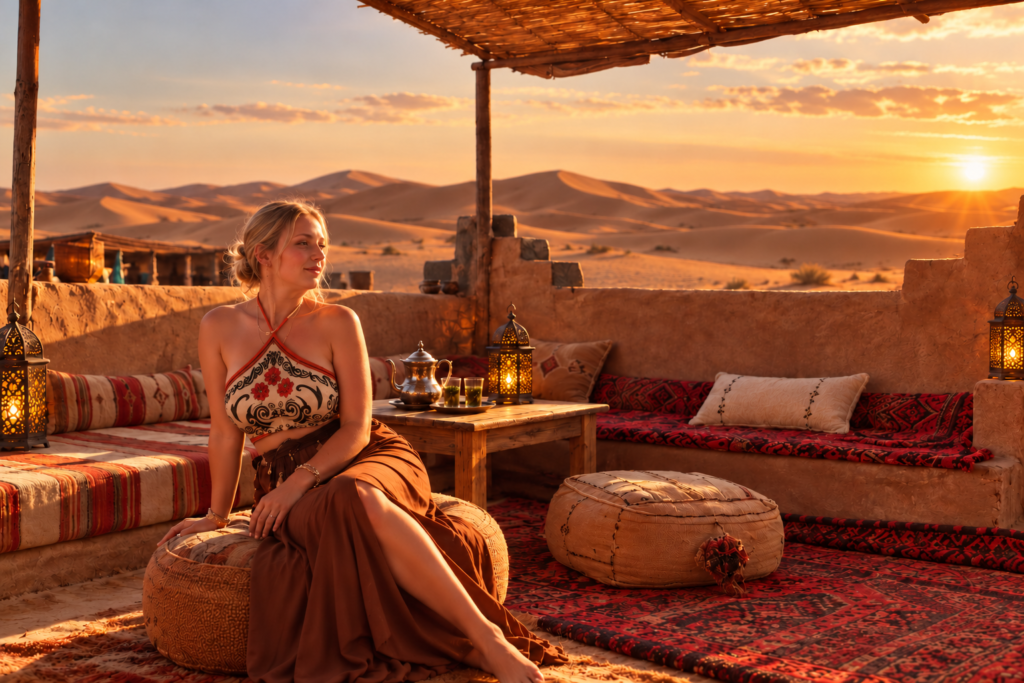
Winter in the Sahara surprises people. Days are often sunny and pleasant, around 18 to 21°C, but the temperature drops quickly after sunset and nights near freezing are normal. A good camp will have heavy blankets, warm bedding and often hot-water bottles; a basic one may not, which is why the choice of camp matters most in winter. The reward is the clearest skies of the year and fewer visitors, except around Christmas and New Year, when camps fill up early.
Spring: March and April
Spring brings warm days, mild nights and green palm groves in the oases on the way. It is also the windiest season, and a sandstorm can occasionally blow for an afternoon. They rarely last long, but bring a scarf and sunglasses. Easter and the European spring holidays are busy, so book camps early.
Summer: May to September
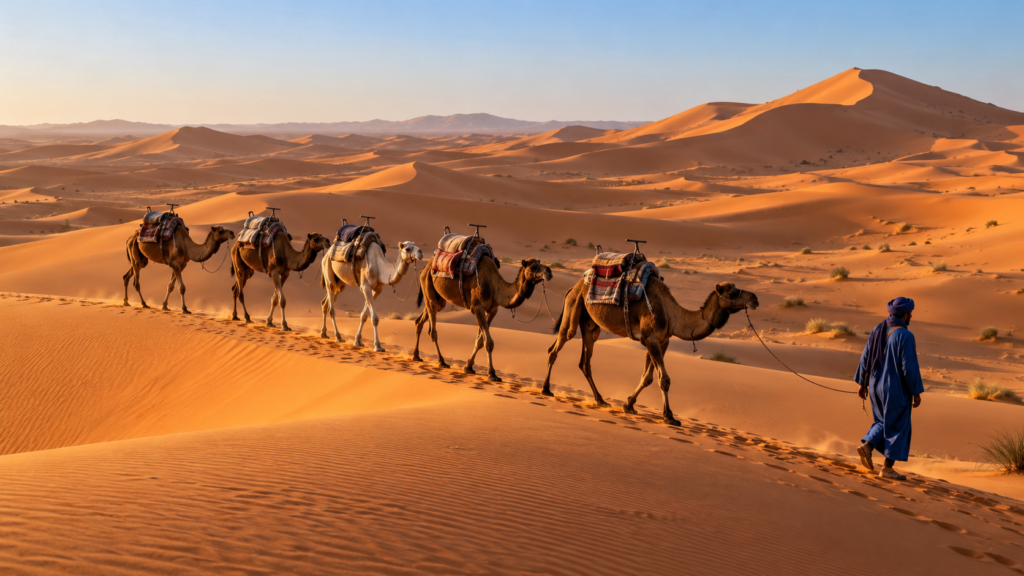
From late May to early September, afternoon temperatures in the desert regularly reach 40°C or more. Even at night it can stay above 25°C, and the long drive to the dunes is exhausting. We generally advise against sleeping in the dunes in July and August. If summer is your only option, keep the desert part short, arrive in the late afternoon, choose a camp with good airflow, and spend the hot hours elsewhere. Alternatively, plan a route around the cooler High Atlas and the Atlantic coast instead.
Other things to consider
- Stargazing: for the darkest skies and the Milky Way, plan your desert night close to a new moon. A full moon over the dunes is beautiful in a different way, bright enough to walk without a torch.
- Ramadan: the holy month moves about eleven days earlier each year. Tourist services keep running, but some restaurants on the road close during the day. It can be a very special time to travel, with lively evenings after sunset.
- School holidays: Christmas, New Year and Easter are the busiest periods. The best camps can sell out months ahead.
- Light for photos: the hour after sunrise and the hour before sunset are when the dunes glow. In winter they last longer and the colours are softer.
If you can choose freely, go in October or early April, plan your desert night near a new moon, and book a camp with proper beds and bathrooms. That combination is hard to beat.
Our advice
Frequently asked questions
What is the best month to visit the Sahara in Morocco?
October is our favourite, followed by November, March and April. Days are warm, nights are comfortable and the light on the dunes is beautiful.
Is it cold in the Sahara at night?
From November to February, yes. Nights near freezing are normal in December and January, so choose a camp with heavy blankets and bring warm layers.
Can you visit the Sahara in summer?
It is possible but uncomfortable: afternoons often pass 40°C in July and August. If you go, keep the desert part short and avoid the middle of the day.
When is sandstorm season in Morocco?
Wind is most common in spring, especially March and April. Sandstorms usually pass within hours and rarely disrupt a trip, but a scarf and sunglasses are essential.
Read our wider guide to when to visit Morocco, region by region, or explore our private Sahara desert tours.
Tell us your dates and who is travelling. We reply within one working day with a first idea for your route.