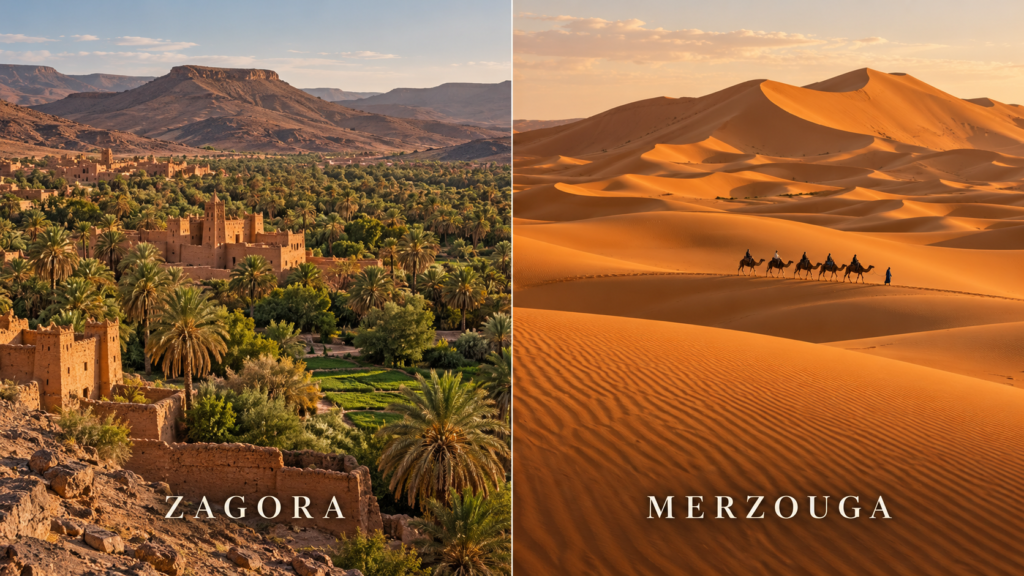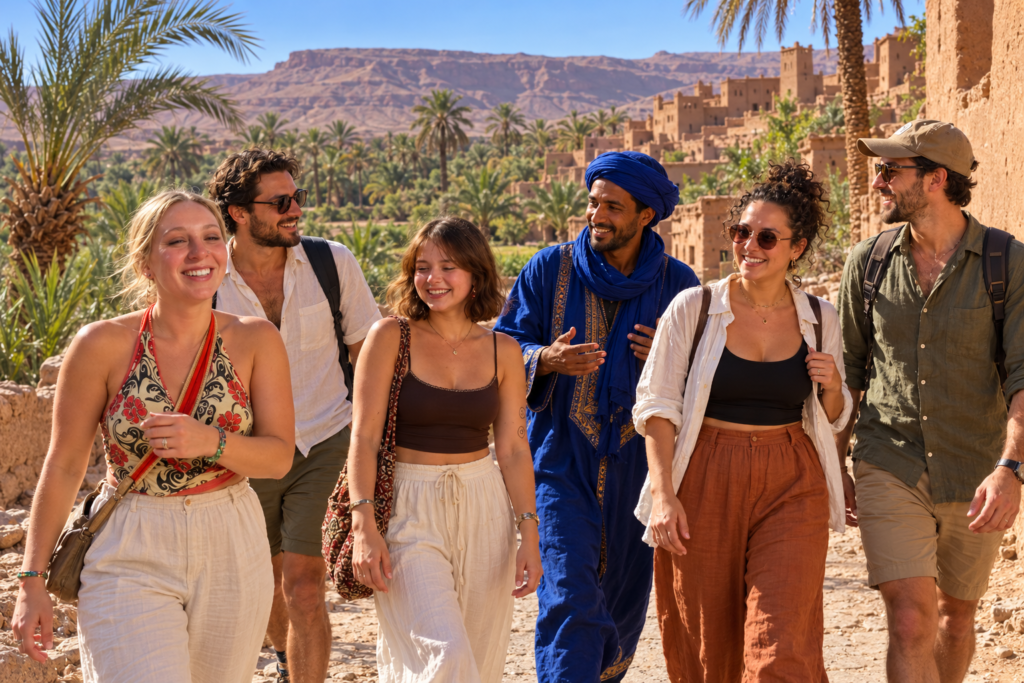

Seven days is enough to see the heart of Morocco well, as long as you travel in one direction. The route below is the one we recommend most often for a first visit: two nights in Marrakech, a slow crossing of the High Atlas, a night in the Dadès Valley, a night in the Sahara dunes at Erg Chebbi, and two nights in Fes. It avoids backtracking, keeps the long drives broken into scenic stages, and ends in the most remarkable medina in the country.
Book an open-jaw flight: arrive in Marrakech (RAK) and leave from Fes (FEZ), or the reverse. Both airports have direct flights to many European cities, and it saves you a full day of driving back.
Before you book
The route at a glance
| Day | Route | Night |
|---|---|---|
| 1 | Arrive in Marrakech | Marrakech |
| 2 | Marrakech: medina, palaces and gardens | Marrakech |
| 3 | Tizi n’Tichka pass, Aït Benhaddou, Dadès Valley | Dadès Valley |
| 4 | Todra Gorge, then camel ride into Erg Chebbi | Desert camp |
| 5 | Sunrise on the dunes, Ziz Valley, Middle Atlas | Fes |
| 6 | Fes el-Bali, the old medina | Fes |
| 7 | Departure from Fes |
Day 1: Arrive in Marrakech
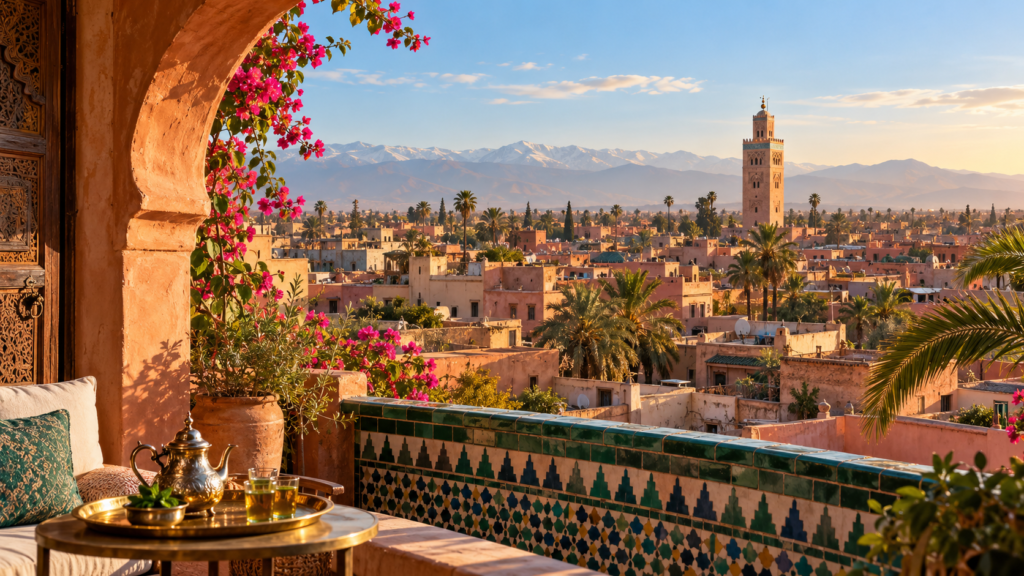
Settle into a riad inside the medina, a traditional house built around a courtyard, and keep the first evening easy. Walk to Jemaa el-Fna square around sunset, when the food stalls light up and the storytellers and musicians gather, then have dinner on a roof terrace above the noise.
Day 2: Marrakech in depth
Start early, before the heat and the crowds. A good day might include the Bahia Palace, the Ben Youssef Madrasa, the souks of the medina with a local guide who knows which workshops are genuine, and the Jardin Majorelle in the afternoon. If you are up for a very early start, a hot-air balloon flight at sunrise over the Atlas foothills is unforgettable.
Day 3: Over the High Atlas to the Dadès Valley
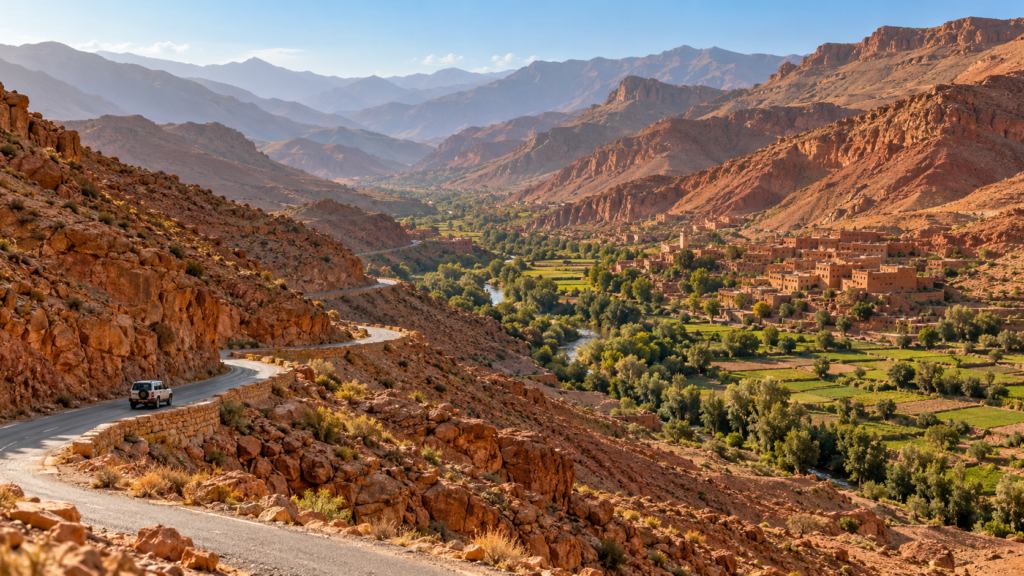
The real journey begins. The road climbs over the Tizi n’Tichka pass at 2,260 metres, with views back over the mountains, then drops to Aït Benhaddou, the fortified earthen village listed by UNESCO and used as a set in countless films. After lunch, continue past Ouarzazate and the oasis of Skoura along the road of a thousand kasbahs, and spend the night in the Dadès Valley, among its red rock formations.
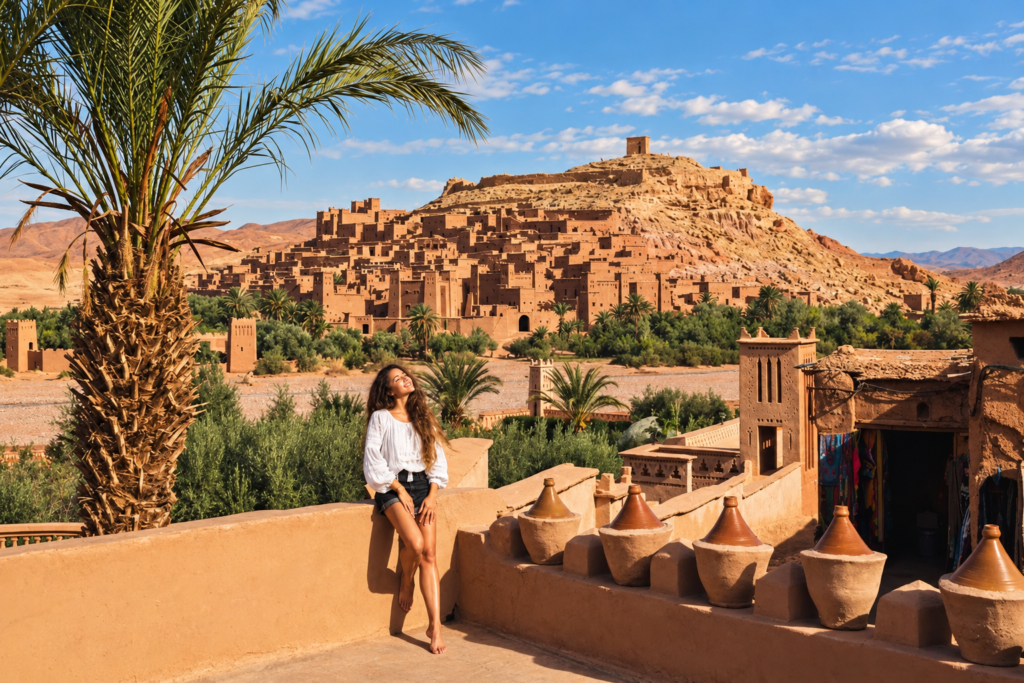
Day 4: Todra Gorge and a night in the Sahara
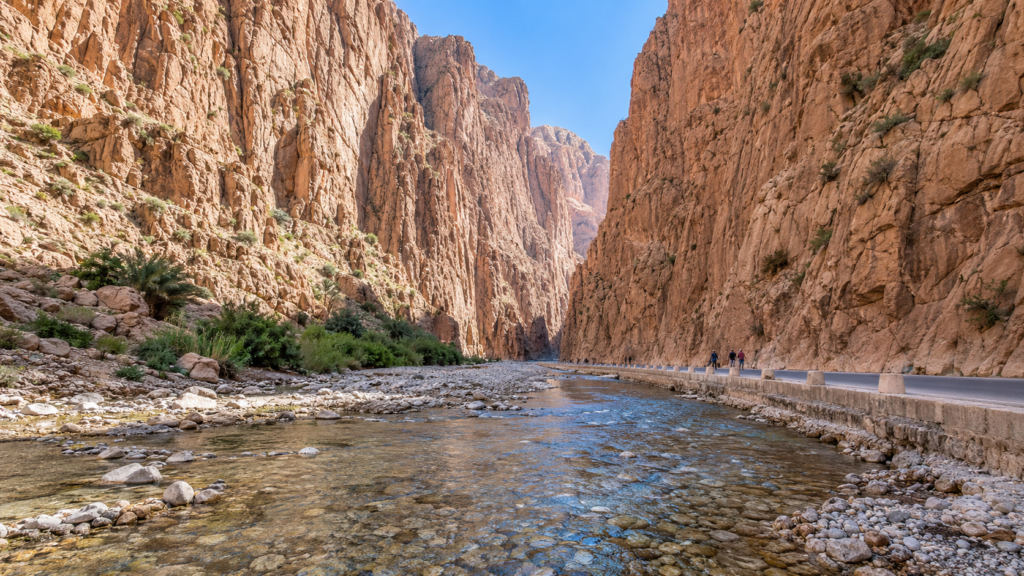
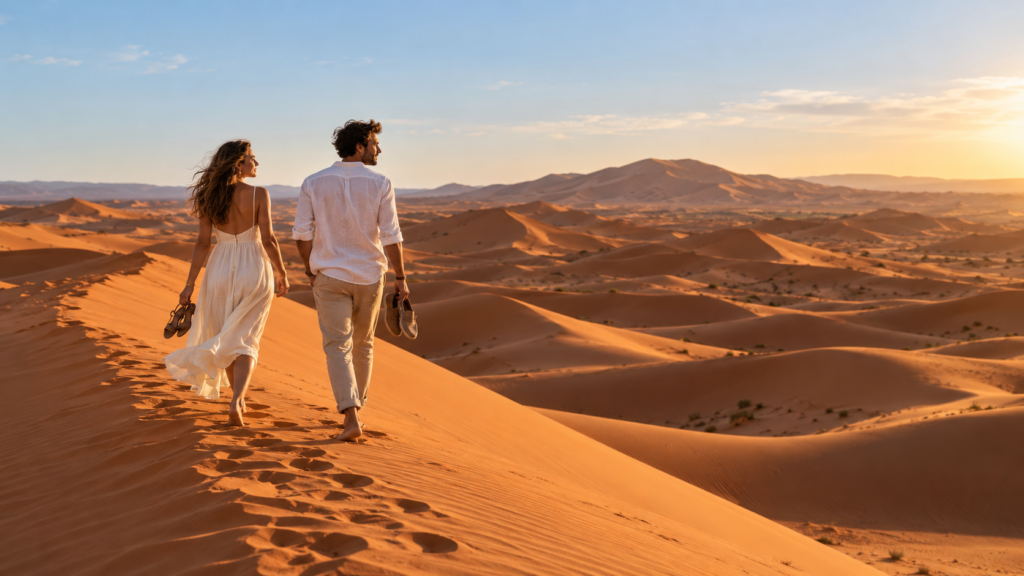
In the morning, walk into the Todra Gorge, where sheer limestone walls close in around a clear stream. The afternoon brings the change everyone waits for: the land flattens, the light turns gold and the dunes of Erg Chebbi appear on the horizon near Merzouga. Ride a camel or take a 4×4 to your camp for sunset on the dunes, then dinner and a sky full of stars.

Day 5: Sunrise, then north to Fes
Wake before dawn to watch the sun come up over the dunes. After breakfast, drive north through the palm groves of the Ziz Valley and up into the Middle Atlas, through the cedar forests near Azrou, where Barbary macaques are often seen by the road, and the alpine-style town of Ifrane. Arrive in Fes in the evening. It is a long day, roughly seven to eight hours on the road, so we plan comfortable stops.
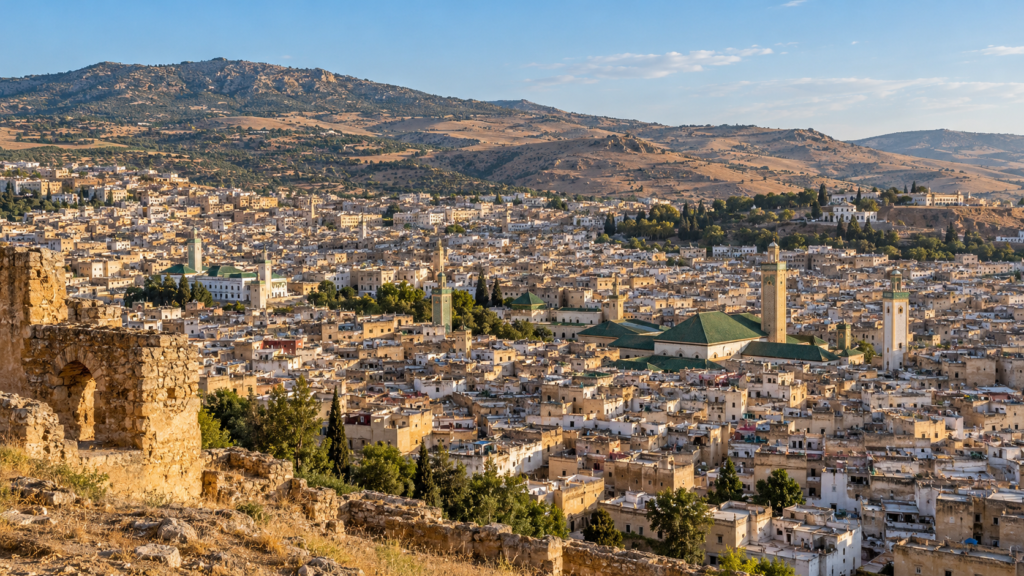
Day 6: The medina of Fes
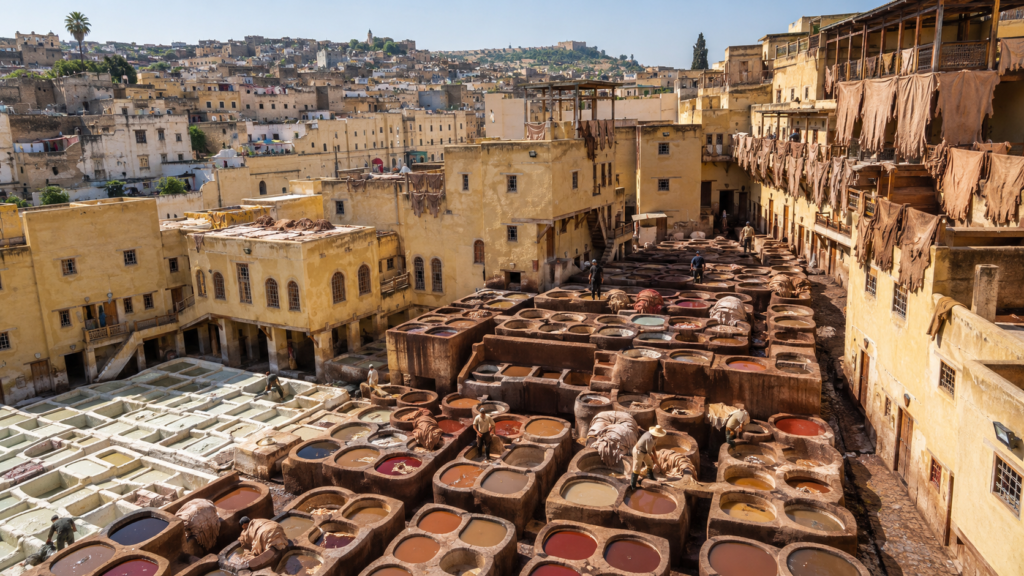
Fes el-Bali, the old walled city, is one of the largest car-free urban areas in the world and a UNESCO World Heritage Site. With a good guide, visit the Bou Inania and Al-Attarine madrasas, look down on the Chouara tannery from a leather shop’s terrace, and see the Al-Qarawiyyin, founded in 859 and often described as the oldest continuously operating university in the world. Non-Muslims cannot enter the mosque itself, but the courtyard can often be glimpsed from the doorway.
Day 7: Departure
Depending on your flight time, there may be a last morning for the Merenid tombs viewpoint above the city, or a final coffee in the medina before your transfer to Fes airport.
Other ways to spend 7 days
- Marrakech, the desert and the coast: two nights in Marrakech, three days to Merzouga and back via the gorges, then two nights in Essaouira. More driving, but you end by the ocean.
- Imperial cities and Chefchaouen: Fes, Meknes, Volubilis and the blue town of Chefchaouen, with no desert. Ideal in summer, when the Sahara is too hot.
- Slow Marrakech and the High Atlas: three nights in Marrakech and three in a mountain lodge, walking between Berber villages. Perfect for a second visit.
Want more time? With ten days, add a second night in the desert and a day in Chefchaouen. Every route we plan is private, so the itinerary can be adjusted to your pace, your interests and the season.
Frequently asked questions
Is 7 days enough for Morocco?
Yes, for one region-to-region route. Seven days lets you see Marrakech, the High Atlas, the Sahara and Fes without rushing, as long as you travel one way rather than returning to your starting point.
What is the best 7-day route in Morocco?
For a first visit, Marrakech to Fes via Aït Benhaddou, the Dadès and Todra gorges and a night in the Erg Chebbi dunes. It combines the best cities with the most dramatic landscapes.
Should I self-drive or take a private driver?
Self-driving is possible, but mountain roads, long distances and medina parking make a private driver-guide far more relaxing, and you gain local knowledge along the way.
When is the best time for this itinerary?
March to May and late September to November. In July and August the desert is too hot for a comfortable night; consider a coast and mountains route instead.
See our private Morocco tours and the Imperial Cities & the Sahara journey, or read how to get from Marrakech to Merzouga.
Tell us your dates and who is travelling. We reply within one working day with a first idea for your route.